
3D and High Impact Format T's & C's
HIGH IMPACT PROJECT REQUIREMENTS
High Impact projects involve more planning, production and specialist work than standard banner projects. Following these requirements helps Creative Studio begin production on time and avoid unexpected delays.
📦 CREATIVE ASSETS
📦 CREATIVE ASSETS
Development can only begin when Creative Studio has received all the assets required for the project.
STANDARD BRAND ASSETS
For ALL projects, please provide:
- Editable brand or campaign files, such as .PSD, .AI or .FIG
- High-resolution logos
- Font files
- Brand guidelines, if available
- Final, approved copy
- Final call to action (CTA)
- Music as an .MP3, or an approved music reference if relevant
- Legal copy and mandatory disclaimers
*Read more about Open Files for standard projects here.
🧊 ASSETS REQUIRED FOR 3D PROJECTS
If the project includes a 3D product or object, we also need:
- An existing 3D model of the product
- 3D model file format: .GLTF for web 3D format, .FBX or .OBJ
- UV wrapped with provided texture image files
- If 3D assets don't exist, we would need the below to create a 3D model from scratch:
- Flat label or sticker artwork in .AI, .EPS or print-ready PDF format
- Packaging layouts and dielines
- Material and finish details, such as matte, gloss, metallic or transparent
- Clear reference photographs from different angles (IE. orthographic reference photos)
WHAT DOES “UV MAPPED” MEAN?
- A 3D model is the shape of the object
- The texture image is the surface design, such as its colours, label, logo and product information
- UV mapping tells the 3D software exactly where each part of the flat texture image must appear on the model
- It works like wrapping a printed label around a bottle or packaging artwork around a box
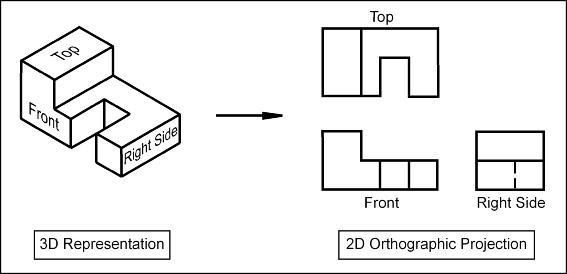
WHAT ARE ORTHOGRAPHIC REFERENCE PHOTOS?
- These are photographs taken straight from the front, side, back or top of an object
- The photographs should be taken from flat, parallel angles to reduce perspective and camera distortion
- Around 20 photographs from different angles are usually needed to produce a smooth and accurate 3D model
📅 WHEN DOES THE PRODUCTION TIMELINE BEGIN?
Lead times commence only after:
-
All necessary assets have been received
-
The storyboard has been approved, where required
-
Legal copy and disclaimers have been approved
-
The project scope has been confirmed
-
A Creative Studio production slot has been allocated
The estimated timeline assumes:
- Feedback is consolidated
- There are no major scope changes
- Approvals are provided within the agreed review times
🗺️ STORYBOARDS
🗺️ STORYBOARDS
WHEN IS A STORYBOARD REQUIRED?
A storyboard is used for experiences that include 3D modelling or animation.
It shows how the experience will work before development begins. This allows the client to review and approve the complete experience in advance.
WHAT DOES STORYBOARD APPROVAL INCLUDE?
Approving the storyboard means approving:
- The user journey
- Gameplay
- Navigation
- User interactions
- Features
- Functional behaviour
- Screen order and flow
- Success or completion states
- CTA placement
Development begins only after the storyboard has been approved.
WHAT HAPPENS AFTER STORYBOARD APPROVAL?
Once the storyboard is approved, the project scope is considered locked.
This means the agreed structure and functionality should not change during production. Requests such as the following may be treated as a change in scope / new project:
- New game mechanics
- New interactions
- New animations
- Additional screens
- A different user journey
- Different prizes
- New platform integrations
- Additional tracking requirements
- Different loading sequences
- New augmented reality behaviours
A scope change may require:
- A revised production timeline
- Additional production costs
- A new project estimate
- The project to restart as a new brief
✏️ PRODUCTION REVERTS
✏️ PRODUCTION REVERTS
A production revert is a small visual or content change that does not change how the approved experience works.
EXAMPLES OF PRODUCTION REVERTS
- Updating copy
- Changing a logo
- Adjusting colours
- Changing a font
- Replacing an image
- Making a small positioning adjustment
- Changing CTA wording
WHAT IS NOT A PRODUCTION REVERT?
The following requests change the structure or functionality of the experience and must be submitted as a new brief:
- New features
- New interactions
- New animations
- New game logic
- Additional screens
- New prizes
- Different win logic
- Additional tracking
- Changes to camera behaviour
- A redesign of the experience
A new brief may require a new production schedule and may affect the delivery date.
💬 CLIENT FEEDBACK
All feedback must be collected and submitted as one complete list per revision round.
WHAT IS A REVISION ROUND?
A revision / revert round is one consolidated submission of client feedback.
It may include several individual changes, provided they are sent together. Creative Studio will complete the changes and return one revised version.
❌ PLEASE DO NOT SEND FEEDBACK:
- Across several separate emails
- In small pieces at different times
- Across different Slack conversations
- Separately from different stakeholders
- After the version has already been approved
Before making changes, Creative Studio may ask for confirmation that feedback from all decision-makers has been included.
Once a revised version has been returned, any additional feedback will count as a new revision round, even if the requested changes are small.
The new revision round will re-enter the production schedule according to current Creative Studio capacity. This may affect the final delivery date.
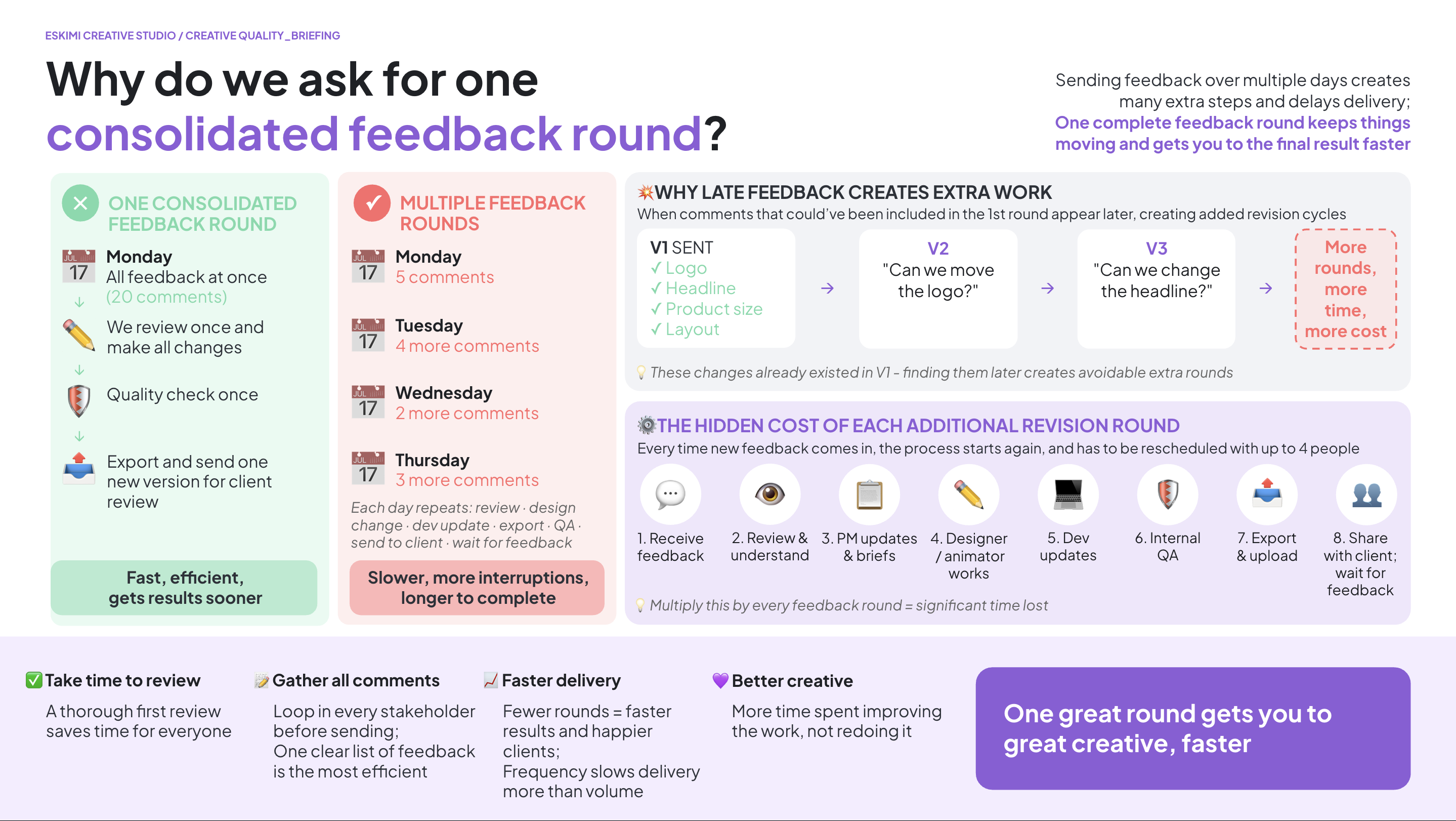
Submitting consolidated feedback allows the Creative Studio to complete revisions more efficiently, reduces project coordination overhead, minimises the risk of conflicting instructions, and helps ensure timely delivery.
⏱️ CLIENT REVIEW TIMES
The production timeline allows the following time for client review:
| REVIEW STAGE |
CLIENT REVIEW TIME |
| Version 1 | 1 working day |
| Version 2 | 1 working day |
| Final quality check | 1 working day |
If feedback or approval takes longer, the final delivery date will move accordingly. The timeline may also change depending on the number and complexity of the requested revisions.
🚨 NEW REQUIREMENTS DURING PRODUCTION
Adding new requirements after production has started increases the amount of work, project coordination and delivery risk. The agreed timeline assumes that the approved brief will remain substantially the same throughout production.
If requirements change after development begins, Creative Studio may need to review:
- The project scope
- The delivery timeline
- Production costs
- The commercial agreement
Further production may pause until the revised requirements have been reviewed and agreed.
Complete brief = faster project start. Missing information, late feedback or changes to the approved scope may affect the production schedule and delivery date.
⚖️ LEGAL RESPONSIBILITIES
⚖️ LEGAL RESPONSIBILITIES
The client team is responsible for supplying all required legal and regulatory information.
This may include:
- Mandatory legal copy
- Regulatory disclaimers
- Promotional terms and conditions
- Competition rules
- Prize conditions
- Age restrictions
- Nutritional statements
- Compliance wording required for specific countries
Creative Studio can add the supplied legal wording to the experience, but cannot provide legal advice or approve the wording on the client’s behalf.
The client must confirm that all supplied wording is correct, approved and suitable for the countries where the campaign will run.